
Online Casino Game Shows in the UK: How They Work
 Available in GB
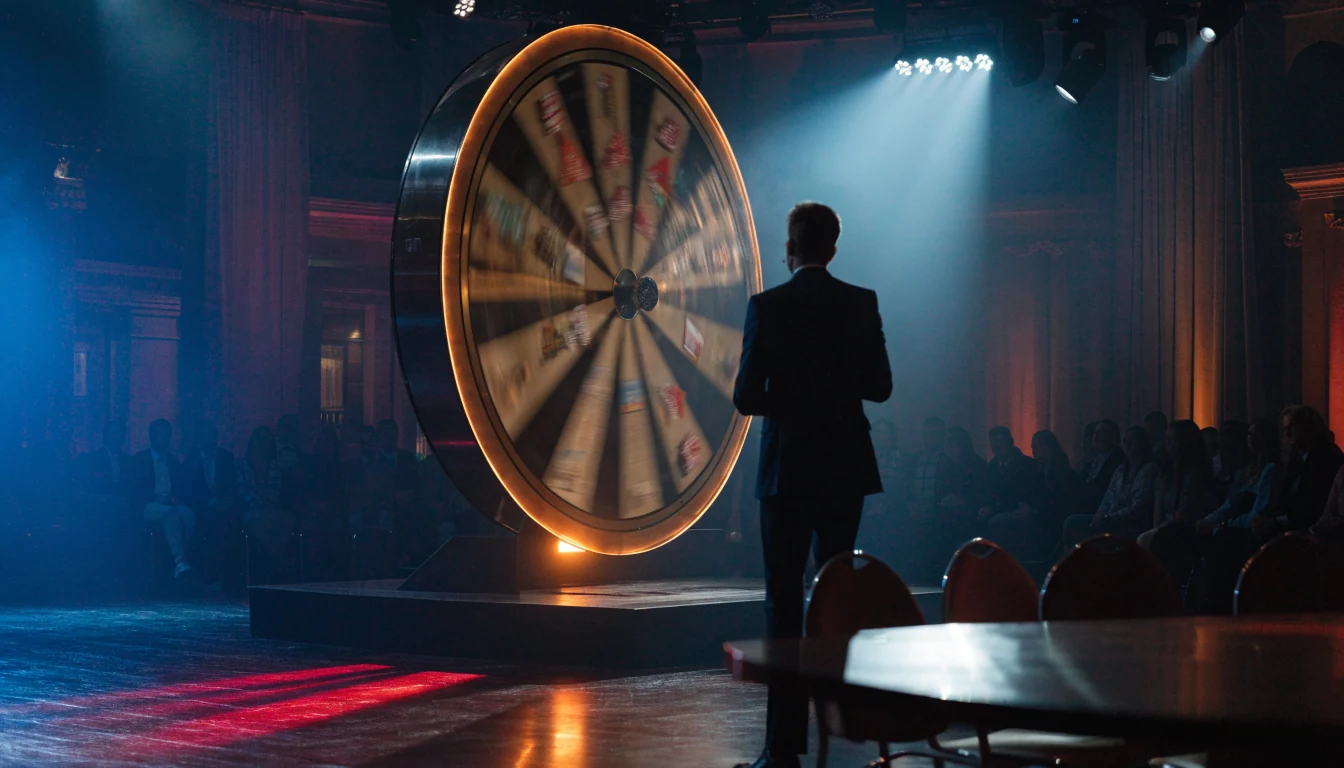
The label signals a show-led style, but each game’s description and rules are needed to understand its host, setup and play.
What “Live Game Shows” Means in a Casino Lobby
“Live game show” is a label for a kind of casino entertainment, not a precise description of how every game behind that label works. In a lobby, it suggests a show-led experience: the presentation borrows the language and feel of televised entertainment, while the casino context places it among gambling products. That broad meaning is useful, but it leaves plenty unspecified.
I have found that lobby labels do two jobs at once. They help sort a large catalogue into recognisable categories, and they give a visitor a quick impression of what a title might feel like. The trade-off is that a category name is not a technical specification. It cannot, by itself, establish who presents a game, whether a host appears, how a round proceeds, or what the player is asked to do. Those details belong to the individual game’s description and rules.
The word “live” can also carry more than one implication. It may lead someone to expect a real-time, hosted presentation, but the label alone is not proof of any particular production setup. “Game show” points towards a style of presentation; “live” adds an expectation of immediacy. Neither word settles the practical questions. A careful reading starts with the category as a signpost, then treats the game’s own information as the authority on its mechanics.
That distinction matters because casino lobbies are commercial interfaces, not formal classifications of game design. Categories can help people browse, but their boundaries are not necessarily uniform between platforms. A title might be grouped according to its visual presentation, its interaction style, or the operator’s own navigation scheme. The same broad label can therefore contain experiences that are not identical. The category is a starting point, not a guarantee of a shared structure.
It is also useful to keep “show” separate from “game”. The show element describes how the entertainment is framed; the game element describes what determines play and outcomes. A lively set, presenter, or television-style theme would not, on its own, tell anyone how a game works. Conversely, a casino game can borrow familiar show language without being a television programme or reproducing a broadcast format. Presentation is not the rules.
Best Online Casinos with No Limits: UK Guide · Amatic Slots at UK Online Casinos: How They Work
The casino setting adds another layer. A game-show label in a gambling lobby does not make the product a general entertainment programme. It appears in a commercial gambling environment, where the operator’s terms and the game’s rules govern participation. The label may sound informal and familiar; the context is still a casino. That is the part promotional descriptions can leave in the background.
In Great Britain, commercial gambling activity, including remote casino gambling, falls under the Gambling Commission’s remit. Its oversight applies to remote gambling offered to consumers in Great Britain even when key equipment is located elsewhere. The Commission issues operating licences to businesses and personal licences to individuals working in relevant roles. That regulatory framework identifies who is responsible for licensed gambling; it does not turn a lobby category into a regulator-defined game type.
So the phrase is best read as a broad browsing term. It points towards casino games presented with a show-like identity, while leaving the exact experience to be established title by title. A category page may help locate that kind of entertainment, but it does not answer every question about a game’s presentation or rules. Labels compress. Details matter.
This is where a small wording choice can mislead. “Live” may be read as a promise about what happens on screen, while “game show” may suggest a familiar format. Taken together, they can create a stronger impression than the label itself supports. I treat both as clues, not evidence: the game’s own description should explain what is being offered, and its rules should explain how it operates. If those materials do not clarify the distinction, the category name cannot fill the gap.
There is no need to force every title into a sharper definition before the label has done its modest job. It signals a meeting point between casino play and show-style presentation. It does not tell the whole story, and it is not a substitute for the individual game information. A useful category. An incomplete description.
In Great Britain, remote casino gambling is overseen by the Gambling Commission, which issues operating licences to businesses and personal licences to relevant individuals.
Casino Game Shows as a Format
A casino game show is best understood as a way of packaging gambling, rather than as a precise category with one fixed set of rules. The label borrows the language of television entertainment: a host or presenter, a visible set, an unfolding event and a sense that something is happening in front of an audience. The gambling element sits inside that presentation. That combination is what separates the format, in broad terms, from a conventional digital slot or table game.
The distinction is about framing, not necessarily about how an outcome is determined. A show-like presentation can make a game feel more like a performance, but the appearance of a stage, a presenter or a dramatic reveal does not by itself explain the underlying rules. I keep those questions separate. First comes the format: how the game is presented and what kind of attention it asks for. Then come the rules and conditions, which must be read on their own.
The word “show” also carries a useful warning. It can suggest a programme built around skill, audience participation or a narrative that affects what happens next. In a casino context, those impressions should not be taken as evidence of any such feature. Entertainment language describes the presentation; it does not establish how a particular game works. The rules are the working document. The set is the packaging.
What the format adds
Compared with a game that presents mostly symbols, cards or a simple interface, a game-show format puts more emphasis on the event as it unfolds. Visual design, sound and pacing may do more of the work. A player is not just looking at a result; the presentation may make the route to that result part of the experience.
Megaways Slots at UK Online Casinos: How They Work · Online Casinos with Big Jackpot Slots: UK Guide
That can change the feel of a session without changing the basic commercial relationship. The casino supplies access to a gambling product, and the player takes part under that product’s rules. A lively presentation does not turn the activity into ordinary television, and a familiar television style does not make it a competition with a guaranteed prize. The distinction matters because entertainment cues can be persuasive even when they reveal little about the game’s terms.
I find it useful to think of the format as a layer placed around the game. One layer is presentation: the host, graphics, sound and rhythm. Another is the actual play: what choices are available, what counts as a result and how any outcome is settled. The two can be closely integrated, but they are not interchangeable. A colourful round may still be governed by rules that are much less theatrical than the screen suggests.
Why the label is broad
“Casino game shows” is an umbrella phrase, not a promise that every title follows the same template. One product may lean heavily on a presenter; another may borrow the look of a television set or the pacing of a studio segment. The amount of interaction, the structure of a round and the role of the visual show can differ. The label alone cannot tell a reader which of those elements a particular game uses.
This is also why a casino’s presentation of the category can be more straightforward than its boundaries. A lobby may group products under entertainment-oriented headings because they share a recognisable style. That grouping is useful for browsing, but it is not a technical definition. It does not prove that the games share a provider, ruleset or method of determining outcomes.
Do
- Treat the rules as the working document
- View the set as the packaging
- Separate the format from the rules
Don’t
- Mistake entertainment language for mechanics
- Assume a show-like presentation implies skill
- Treat the set as evidence of how the game works
In industry copy, “live” and “show” can sound like quality markers. I treat them as descriptions to unpack, not endorsements. A polished set can make a product easier to follow, while a host can give its sequence a human focal point. Neither feature, on its own, demonstrates fairness, value or suitability. Those are different claims, requiring different evidence.
The format is therefore easiest to understand without treating it as either a standard game type or a guarantee of television-style participation. It is a casino presentation built around the feel of a hosted entertainment event. The details remain product-specific. That is the useful boundary: showmanship describes the wrapper; the rules describe the play.
The Online Live-Show Experience
Putting a casino game show online changes more than its location. The experience is presented through a screen: a live picture, an interface for the game and, where the format calls for it, a presenter guiding the action. The word “live” describes the real-time presentation; it does not mean that players are gathered in the same room or that the online experience is identical to watching a television programme.
The screen has to do two jobs at once. It carries the show and explains what the player can do within it. Those parts may sit together, but they serve different purposes. The broadcast supplies atmosphere and a sense of shared occasion. The controls and on-screen information make the game usable. When the interface is clear, attention can move between the presenter, the unfolding action and the decision points. When it is not, the show can feel like a video with a game awkwardly attached.
Microgaming Slots in the UK: Checking Casino Claims · Mega Moolah Casinos in the UK: What to Verify
That distinction is easy to miss in promotional language. “Immersive” sounds like a quality of the show, but the practical question is whether the presentation helps explain what is happening. A lively studio does not, by itself, make rules easier to follow. Nor does a polished stream establish anything about a game’s odds or outcomes. Those are separate matters.
Online delivery also changes the sense of participation. A player is not physically among the people or equipment shown on screen. Interaction happens through the casino interface, while the broadcast continues in real time. That creates a particular balance: the show supplies performance and pacing, while the software handles the player’s actions. It is a joined experience, not a single thing.
From the operator side, I see why that distinction matters. The video can attract attention, but the interface carries the practical burden. It needs to show what is available at each point and make the transition between watching and acting understandable. If a screen is crowded, or if important information competes with the presentation, the live quality can become a distraction rather than an advantage. The show may be energetic. The interaction still has to be legible.
An energetic live show can become a distraction if the screen is crowded or if important information competes with the presentation.
Connection and device also shape the experience. A live stream depends on a usable connection and a screen on which both the broadcast and controls can be followed. On a smaller display, elements may be compressed or require more attention to navigate. That is not a verdict on any particular casino or title; it is a basic consequence of moving a broadcast-led format into a browser or app.
The online setting can make a show feel immediate, but immediacy is not the same as control over the event. The player interacts with the game through the options presented, while the show’s pace and presentation remain part of the product. That separation helps explain why someone may enjoy the spectacle yet still prefer a quieter game, or find that a visually busy presentation makes it harder to concentrate.
I treat “live” as a description of how the experience is delivered, not a quality mark. It signals a real-time, broadcast-led setting within an online casino. Whether that setting works comes down to the relationship between stream, rules and interface. All three matter.
What a “Best” Game Show Would Need to Prove
Choosing an online casino for game shows involves more than the games themselves; it is also worth checking practical details such as how quickly withdrawals are paid. This list gives you a concise reference point as you consider your options.
1. BeOnBet
Payout speed: 1-3 business days
BeOnBet lists a payout speed of 1–3 business days.
2. Jetsetspins
Payout speed: 1-3 business days
Jetsetspins lists a payout speed of 1–3 business days.
3. Amunbet
Payout speed: 1-3 business days
Amunbet lists a payout speed of 1–3 business days.
4. WinBeast
Payout speed: 1-3 business days
WinBeast lists a payout speed of 1–3 business days.
5. Dieselwin
Payout speed: 1-3 business days
Dieselwin lists a payout speed of 1–3 business days.
6. Chanze
Payout speed: 1-3 business days
Chanze lists a payout speed of 1–3 business days.
7. Revery Play
Payout speed: 1-3 business days
Revery Play lists a payout speed of 1–3 business days.
8. Britsino
Payout speed: 1-3 business days
Britsino lists a payout speed of 1–3 business days.
9. SlotoSport
Payout speed: 1-3 business days
SlotoSport lists a payout speed of 1–3 business days.
10. x3bet
Payout speed: 1-3 business days
x3bet lists a payout speed of 1–3 business days.
“Best” is not a feature of a game; it is a conclusion drawn from chosen criteria. A credible assessment of online casino game shows in the UK would first need to say what it is comparing and why. A ranking based on presentation may produce a different result from one based on rules, pace, accessibility or the clarity of information. Without that explanation, the order is decoration.
I would look for criteria that can be checked rather than adjectives that cannot. “Exciting” and “immersive” describe a reaction, not a consistent standard. A comparison becomes more useful when it explains what was examined: for instance, whether the rules are easy to locate, whether the game’s key conditions are stated clearly, and whether the experience is evaluated on the same basis across the titles included. The point is not to make every assessment numerical. It is to make the reasoning visible.
Scope matters just as much. A list of live casino game shows should not quietly mix in unrelated casino games, or compare titles observed under different conditions without saying so. Nor should a page imply that a small selection represents the whole UK market. I would expect the writer to define the category, state what was included, and make clear when the assessment was made. Availability can change; a ranking that does not show its date may describe a past lobby rather than a present choice.
Push Gaming Slots at UK Casinos: How to Check
There is a separate question of whose evidence is being used. A casino’s description can establish how that operator presents a title, but promotional copy is not an independent verdict. A reviewer’s impressions may be useful, yet readers need to see the basis for them: what was tested, what was compared and which judgements are personal. When a claim depends on a specific condition, the condition should be shown rather than hidden behind a glowing label.
In my experience, the word “best” often does commercial work before it does analytical work. It gives a page a decisive tone, while leaving the standard undefined. That does not automatically make the assessment wrong. It does mean the evidence has to carry more weight than the headline. If the method is absent, the ranking is difficult to distinguish from preference.
UK context also has to be handled accurately. Real-money remote gambling offered to customers in Great Britain must be provided by an operator holding the relevant UKGC licence. That establishes a regulatory boundary; it does not prove that a particular show is superior, or that every licensed casino offers the same selection. A sound comparison should not turn legal status into a quality score.
So a defensible shortlist of the best online casino game shows would need a stated scope, comparable criteria, dated observations and a clear separation between factual description and opinion. It would also need to show where the evidence stops. No ranking can settle every player’s preference. But it can explain its own judgement. That is the test.
Evaluation Criteria
- Use checkable criteria rather than adjectives like “exciting”
- Define the scope and date of the assessment
- Separate factual descriptions from personal opinion
- Verify the operator holds a relevant UKGC licence
Finding Live Game Shows in an Online Casino
A casino lobby is a route into games, not a complete inventory of everything a platform can provide. A live game show may be grouped under a broad live-games heading, given its own tile, or not shown in the part of the lobby being viewed. The label alone does not establish that a particular title is available to play.
I have seen how easily a lobby can be mistaken for a supplier’s catalogue. They are different things. The platform presents content to customers; a game supplier provides software to operators. A title appearing in a supplier’s catalogue does not, by itself, mean it is available at every casino, or at any particular one. Access depends on what the operator has integrated and made available through its service.
That distinction matters when looking for a casino that offers live game shows. A general “live” category may contain different kinds of games, while a title page or game tile may make the format clearer. The practical check is whether the specific game can be opened within the casino account, rather than whether a promotional page or a broad category uses familiar wording. A tile can describe a product; it is not proof that it is currently accessible.
For players in Great Britain, the operator providing real-money gambling must hold a UKGC licence. The licence position concerns the operator’s permission to serve the market; it should not be confused with a guarantee that every game category or title will be present. The UK Gambling Commission also regulates remote gambling offered to Great Britain consumers regardless of where the operator’s key equipment is located.
Eyecon Slots at UK Casinos: What to Verify
The operator is the customer-facing business. It handles deposits, payouts, bonus conditions and support, while a software supplier does not take bets directly from British players. That division explains why a supplier’s public catalogue cannot settle questions about a casino lobby: the operator controls the route through which the game is offered.
“Available” needs a narrow meaning. It may refer to a title appearing in a catalogue or to a game that can actually be launched under the account and location conditions that apply. Those are not interchangeable. Nor does a live-game label establish that the stream, table or show format is active at the time of checking. The lobby is the evidence that matters for access.
A sensible comparison therefore starts with the platform’s own game catalogue and the operator’s licence status, then separates category names from playable titles. If a result points to an offshore casino, that does not make it a UK-licensed option: offshore operators sit outside the UKGC system. For British customers, legal online gambling is provided through licensed and regulated sites.
No grand claim required. Just the actual lobby.
Our top casino picks for the UK
- JetsetspinsBonus: 200% Bonus + 100 Free Spins + Free Royal Wheel · Payout speed: 1-3 business days
- BeOnBetBonus: 100% up to €500 + 100 FS · Payout speed: 1-3 business days
- ZombillionBonus: Welcome Pack 250% up to £4000 + 200 FS · Payout speed: 1-3 business days
- SlotoSportBonus: 500% up to £ 10 200+ 777 FS · Payout speed: 1-3 business days
- Revery PlayBonus: 100% up to€1,000+ 100 FS · Payout speed: 1-3 business days
- DieselwinBonus: Welcome Pack 250% up to £4000 + 200 FS · Payout speed: 1-3 business days
- BritsinoBonus: Welcome Package – Get your £2,200 + 2,000 FS · Payout speed: 1-3 business days
- NightLuckBonus: Welcome Pack + 805% Up To 6400€ + 280 FS · Payout speed: 1-3 business days
- ChanzeBonus: Slots Welcome Bonus #1 200% up to €500 · Payout speed: 1-3 business days
- x3betBonus: Welcome Pack 100% Up to £1.000 + 200 Free Spins · Payout speed: 1-3 business days
Searches for Crazy Time and Funky Time
Crazy Time and Funky Time are names that can lead into a very specific kind of casino search: not a general interest in live entertainment, but an attempt to find a particular title. The wording suggests that the person expects a named show to be available to play. That expectation is not proof of what the product is, who supplies it, or whether it appears in a particular casino.
A title like "Crazy Time" or "Funky Time" is a starting label; it does not confirm a game’s current availability, its rules, or its provider.
I have seen how a title can do more work in a promotion than the accompanying description. A familiar name can make a page feel like confirmation, even when it has not established that the item is a playable casino game, that it is live, or that the casino currently carries it. Those are separate points. A name is a starting label, not a complete product record.
What the title does—and does not—tell us
The phrase “Crazy Time” may be used to look for a casino game show, while “Funky Time” can signal a similar interest in a different named experience. But the names themselves do not establish shared mechanics, presentation, rules, or provider. Nor does the word “live” in a listing settle how the experience works. Those details need to come from the game information displayed by the casino or the supplier, not from an assumption based on the title.
That distinction matters when a search result, lobby tile and game page use slightly different descriptions. The tile may be designed to attract attention; the game page should identify what is being offered. If those labels do not match, the discrepancy is worth resolving before treating them as the same product. No glamour in that. Just record-keeping.
Names are not availability checks
A result mentioning either title is not evidence that the game is playable at the casino where it appears. Casino pages can discuss products, list them in promotional material, or refer to availability that has since changed. The only useful confirmation is the current game entry within the operator’s own environment, together with clear product information.
NetEnt slots at UK online casinos: what is verified
For British customers, the legal responsibility sits with the operator that accepts the account and provides remote gambling. A company that supplies gambling software may hold a UKGC licence for that supply role without itself running a consumer-facing casino. The provider and the operator are not interchangeable. That is the part promotional copy often leaves in the background.
I would therefore read a Crazy Time or Funky Time listing as a claim to check, not as a recommendation. The title can identify what someone is trying to locate; it cannot establish the game’s current status, its terms, or the operator’s responsibility. Those belong to the actual product page and the licensed casino offering it.
The UK Casino Search: Availability Is Not a Recommendation
A UK-focused search for live game shows in online casinos combines two separate questions: whether a particular show can be accessed through a casino serving the British market, and whether that casino is a suitable place to play. The first is about availability. The second involves the operator, its terms and the protections attached to its licence. Treating them as one answer is where promotional language can blur important distinctions.
For real-money remote gambling offered to consumers in Great Britain, the operator must hold a UKGC licence. That requirement applies regardless of where the operator’s equipment is located. A show’s appearance in a lobby, or a page describing it as available in the UK, is not by itself confirmation that the relevant operator has the licence needed to serve British customers.
I have seen how listings acquire an air of authority simply by being placed beside a recognisable casino name. But a listing is not a regulator’s record, and a category label does not establish that every title in it is accessible at every casino. Availability can depend on the operator’s own catalogue and arrangements. The practical point is narrower than the advert suggests. Check the specific operator and the specific game.
Regulatory Compliance
Real-money remote gambling offered to consumers in Great Britain must be provided by an operator holding a relevant UKGC licence.
“UK” can also be used as if it were a quality mark. It is not. A UKGC licence is a regulatory requirement for legal remote gambling offered to Great Britain consumers; it does not, on its own, prove that a particular show is entertaining, that its terms suit a particular player, or that a casino deserves an editorial recommendation. Those are different judgements, and they need different evidence.
That distinction matters when a page describes a casino as having the best live game shows. The wording may refer to a selection, a presentation style or simply a marketing preference. Without a clear basis, the phrase cannot establish which shows are actually accessible in a UK-licensed account. Nor does it tell whether the description is current. Casino lobbies change; a search result or old listing can remain visible after the underlying offer has changed.
I would separate the checks rather than let one claim stand in for another. Confirm that the operator is authorised for the relevant remote gambling activity, then verify that the named show is available through that operator. Read the operator’s terms for the account and game, rather than assuming that a general category page covers every condition. A claim about entertainment value is still a separate matter.
The UK context is therefore a boundary, not a verdict. It tells which regulatory framework applies to legal remote gambling for Great Britain consumers. It does not turn a game-show listing into an endorsement, and it does not make an unsupported “best” label more reliable. Availability first. Recommendation separately.
Red Tiger Slots in UK Casinos: Rules and Evidence
How to Read Claims About the Best Live Shows
“Best” is an advertising word until the claim explains what it measures. In live casino game shows, that distinction matters: a page may be judging the show itself, the way a particular casino presents it, or simply how prominently it appears in a lobby. Those are different assessments, even when the headline makes them sound interchangeable.
I look first for a stated basis of comparison. Does the review assess the rules and pace of the show, the clarity of its presentation, or the practical experience of using it through a casino? A verdict without defined criteria is a preference presented as a finding. A confident tone does not fill that gap. Not evidence.
The scope matters just as much. A live show’s presentation can depend on where it is accessed, so a review of one casino’s version should not automatically stand in for every version. Nor does a title appearing in a lobby establish that it is superior to another. A listing tells what that platform displays; it does not explain the basis of a ranking.
I also check whether the evidence is specific enough to test. Useful support describes what was observed and separates that observation from opinion. “Easy to follow”, for instance, is only meaningful when the review explains what made the rules or on-screen information clear. Claims about a smooth experience need context too: the reviewer should distinguish the show’s presentation from the surrounding casino platform and the conditions of that particular session.
How to evaluate “Best” claims
Check for a stated basis of comparison, verify if the review distinguishes the show’s presentation from the casino platform, and ensure the observations are dated and specific enough to be tested.
Dates and limits on a review’s scope are easy to overlook. A live-show assessment can become stale if the lobby, presentation, or access changes. A dated review is not automatically wrong, but it should not be treated as a current comparison without checking what it actually covered.
For UK readers, “best” should not blur the distinction between a show and the casino offering access to it. Remote gambling offered to consumers in Great Britain falls under UKGC licensing requirements. A show’s presence in a lobby is not, by itself, a quality endorsement or proof of the operator’s regulatory status.
The careful reading is simple: identify what is being judged, what evidence supports the judgement, and how far that evidence reaches. If those points are absent, the ranking remains a claim. Not a conclusion.
A Single Live Game Show in the Casino
Looking for one live game show in a casino is a narrower task than browsing a whole category. The wording can refer to a particular title, or simply to the idea of finding one show inside a casino’s live-games area. Those are different things: a category label describes how a lobby groups content; it does not identify a specific programme or establish that it is available.
I have learned not to treat a tile or promotional image as proof of what sits behind it. A title may be presented as a show, while the useful details are elsewhere: the game’s own information panel, its rules, and the operator’s description. Those should make clear what the product is and how participation works. If those details are absent or vague, the image does little work.
The word “live” also needs care. It can suggest a streamed presentation, but the label alone does not establish the format, who presents it, or whether the game is a live-dealer product. In the UK, a casino’s terminology is not a substitute for the actual game information. Read the description, then compare it with what the game itself displays.
Yggdrasil Slots at UK Casinos: What’s Verified
There is another distinction worth keeping: a casino can offer a broad set of live games without offering the particular show being sought. Availability is tied to the operator’s actual lobby, not to the general meaning of the category. And a single listing should not be mistaken for a recommendation. “Featured” is a placement decision; it does not prove quality.
When no specific title is in mind, the sensible starting point is the operator’s live-games section and the information attached to each entry. A label gets attention. Details do the explaining.
Casino Game Shows Played Online
An online casino game show is a casino product presented through a digital service rather than a game encountered in a physical venue. The word “online” describes the setting; it does not, by itself, establish how a particular title works, who supplies it, or whether it is available through a given casino.
That distinction matters because casino menus can group products by presentation, provider or game type, and those labels do not always tell the whole story. A show-like name or visual style is not enough to establish that a game belongs to a particular category. The product description and the rules shown with the game are more useful than the lobby label alone.
Online craps casinos in the UK: games and checks
I have seen how a broad category name can do practical work for a casino: it helps organise a crowded menu, but it can also make unlike products appear interchangeable. They are not necessarily so. The online setting tells little about the mechanics, terms or experience; those need to be assessed at product level.
Nor does the phrase amount to an endorsement. “Online” is a delivery description, not a quality mark. A polished presentation can sit beside unclear rules, while a plain listing may simply offer less information in the lobby. The details that matter are the ones attached to the actual game, not assumptions drawn from its category.
For a casino game show played online, the sensible starting point is therefore modest: identify the product, read its displayed rules and separate what the label suggests from what the game itself confirms. No inference from the name alone.
Are Amatic casinos safe and regulated in the UK?
Amatic is a software supplier, not a consumer-facing casino, and holds a UK Gambling Commission remote software licence. The casino operator must hold the relevant licence and is responsible for deposits, payouts, bonus terms and customer support.
Which licensed UK casinos carry Amatic slots?
Operators listed as carrying Amatic games include Betfred, Jackpotjoy, William Hill, kwiff, PokerStars, Ladbrokes, Paddy Power, Unibet, Virgin Games, Casumo, Sky Vegas, 32Red, 888casino, Bet365, Betway, Betvictor and Betfair. Check the casino’s current provider list, as availability may vary.
What bonuses and free spins are available at Amatic casinos in the UK?
32Red, Betfred and Bet365 offer free-spin wins with no wagering requirement, so winnings are credited as cash. The bet365 offer requires a £10 minimum lifetime deposit and distributes up to 500 spins over 10 days.
What is the new UK slots stake limit and how does it affect Amatic games?
The limit is £5 per game cycle for players aged 25 and over, and £2 for players aged 18 to 24. It applies to online slots, including Amatic games, from 9 April 2025 and 21 May 2025 respectively.
SpinDog Games
Amatic Slots at UK Casinos: Games and Play
Learn how Amatic slots are laid out, where UK casinos offer them, and what to check on mobile and in bonus terms; games use nine or ten fixed paylines.
Online Casino Tournaments in the UK: How They Work
Learn how spins, scores, rounds and opt-in rules shape slot tournaments, including free entry, prize conditions and the UK licensing framework.
Amatic Online Casinos UK: Games, Bonuses and RTP
Learn how Amatic slots work, including five-reel layouts and fixed paylines, and how UK listings, bonus terms and RTP differences affect comparisons.
Endorphina Casinos UK: Separating Claims from Facts
Amatic is an Austrian software supplier founded in 1993, not a casino operator; this page explains why its games cannot verify Endorphina claims.
Created by the "SpinDog UK Guide" editorial team.