
How to Check SpinDog on the UKGC Register
 Available in GB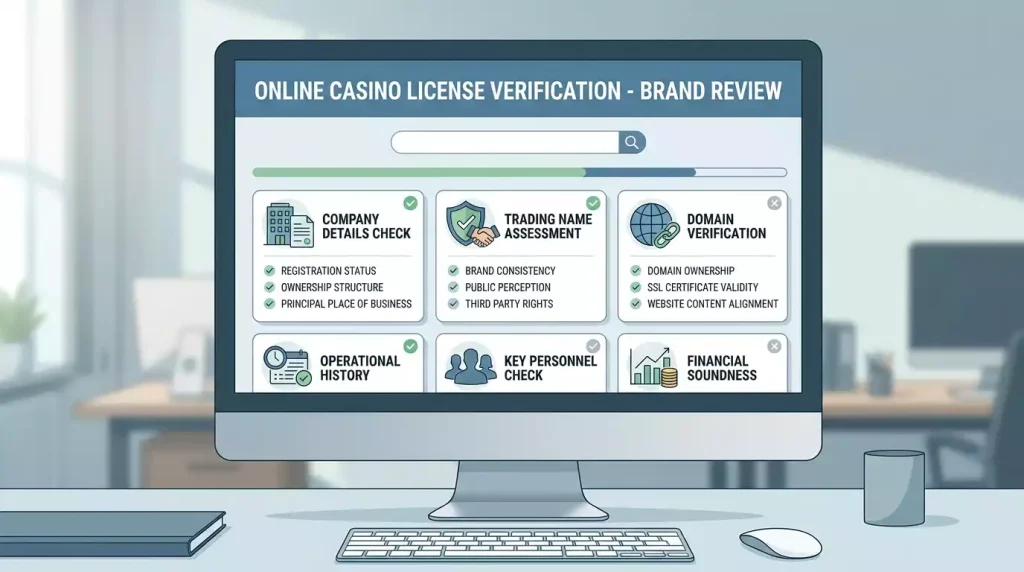
The reliable way to verify a SpinDog UKGC licence claim is to check the Gambling Commission business register, not to rely on affiliate pages, player comments or copied review tables. A current Gambling Commission register match for SpinDog could not be established at the time of writing, so SpinDog should not be described as UKGC-licensed without a matching register trail. The practical task is to connect the business name, trading name, domain and licence activity before trusting the claim.
The register can be searched by business name, trading name, domain name or account number. That matters because a casino brand name is not always the same as the licensed legal entity, and a domain can be listed under a business name the average reader does not recognise.Start with the right question
The question is not “does a review page say SpinDog is licensed?” The question is “can a current UKGC register trail be verified for SpinDog, its operator, a trading name or a related domain?” Those are different standards. A review page can be outdated or wrong. A register entry, if it exists and matches the brand or domain correctly, is stronger evidence.
For Great Britain, UKGC guidance says remote gambling businesses need a Commission licence to provide facilities to British consumers, including overseas businesses serving consumers in England, Scotland or Wales. UKGC’s own remit wording also says remote-gambling provision in Northern Ireland is not regulated in the same way, while advertising remote gambling to Northern Ireland consumers without a Commission licence is an offence. That distinction is why careful GB and UK wording matters.
For a broader trust framework, return to the safety evidence framework. The register check remains only one part of the decision.
The register fields to use
| Search field | Why it matters | How to treat the result |
|---|---|---|
| Business name | The licensed operator may use a company name different from the consumer-facing casino brand. | A match is useful only if the brand or domain connection is clear. |
| Trading name | A casino can be listed as a trading name under a licensed business. | Check whether the trading name is active, inactive or unrelated. |
| Domain name | The domain can connect the register entry to the website a reader actually uses. | Check the exact spelling and avoid assuming similar domains are the same site. |
| Account number | Some operator pages publish a UKGC account number. | Use it only if the number comes from a trusted source, then confirm the business details. |
A careful SpinDog licence-check workflow
- Search the register for “SpinDog” as a trading name and business name.
- Search the exact official domain used by the brand, not a promotional copycat domain.
- Look for a licensed business name, licence status, trading-name status and domain-name status.
- Check whether the licence covers remote casino activity, not just a different gambling activity.
- Compare the register result with the current official SpinDog terms and footer wording.
- If no clear match appears, do not write or assume that SpinDog is UKGC-licensed.
This workflow is deliberately conservative. A single partial match can be misleading if the domain is missing, the trading name is inactive or the licensed business is unrelated. On the other side, a missing result from one brand-name search is not enough to prove a universal block or to make a legal conclusion about every possible user. It is enough to avoid treating UKGC authorisation as verified.
Business name, trading name and domain can diverge
Readers often search only the casino brand name. That can miss a real entry if the operator uses a different company name. It can also create false confidence if a similar name appears but does not connect to the exact domain or trading name. The register’s design is helpful because it lets readers search multiple identifiers, but the interpretation still needs care.
For SpinDog, no UKGC licence was confirmed during the checks used here. That is a caveat, not a marketing label and not a full legal determination. If someone claims a UKGC licence exists, ask for the evidence chain: account name, account number, licence status, remote casino activity, trading name and domain. Without that chain, the claim should not guide a deposit decision.
Do not replace this verification step with general phrases such as “licensed offshore” or “regulated internationally”. UKGC authorisation for Great Britain is a separate question from any other jurisdictional claim. It also does not disappear because a site shows GBP, accepts documents or lists withdrawal rules.
How to interpret a non-match
If the register does not show a clear SpinDog match, the careful wording is: a UKGC licence has not been verified. It is not: “SpinDog is definitely illegal for every UK user”, “SpinDog is a scam”, or “SpinDog always blocks UK players”. Those are stronger claims and require different evidence.
For practical safety, however, a non-verified UKGC position is still important. UKGC guidance says gambling offered to Great Britain consumers without a Commission licence can fall into unlicensed gambling risk, even where an operator says it is licensed elsewhere. A reader should therefore treat a missing UKGC trail as a major caution before account creation, bonuses or payments.
This distinction also protects readers from two opposite mistakes. The first mistake is treating a missing licence as irrelevant because the website loads. The second is treating one uncertain search result as a complete legal answer. The practical middle ground is to avoid making a deposit until local licence evidence, account terms and payment rules are clear.
What to check after the register
Licence evidence is only one part of the decision. If a reader continues researching, the next checks should be account identity rules, payment availability and self-exclusion context. SpinDog terms say verification documents may be required before withdrawals. Payment-method availability can depend on country and method. Responsible-gaming support described by SpinDog should not be treated as the same as UKGC licensee safeguards unless local authorisation is verified.
For money-specific questions, use the payment caveats. For registration and document questions, use the account setup caveats. If your search is connected to self-exclusion or avoiding UK safeguards, read the non-GAMSTOP caveats before looking for workarounds. For the overall page set, you can also return to the SpinDog UK overview.
Frequently asked questions
Can I say SpinDog is UKGC-licensed if one review page says so?
No. A review page is not enough. You need a current UKGC register trail that connects the relevant business, trading name or domain to the brand.Does no verified UKGC licence mean SpinDog definitely refuses all UK players?
No. It means UKGC authorisation has not been confirmed during these checks. Availability, account acceptance and legal status are separate questions that require their own evidence.Why does the page say Great Britain instead of only UK?
Because UKGC remote gambling sources focus on Great Britain, while Northern Ireland has a distinct position in the Commission’s own remit wording. Broad UK wording can hide that difference.
The full picture is in the SpinDog Casino UK review.
The wider safety framework is on the licence and safety page.
Written by the editors at SpinDog UK Guide.