
Casinos That Accept Visa in the UK: Payments Explained
 Available in GB
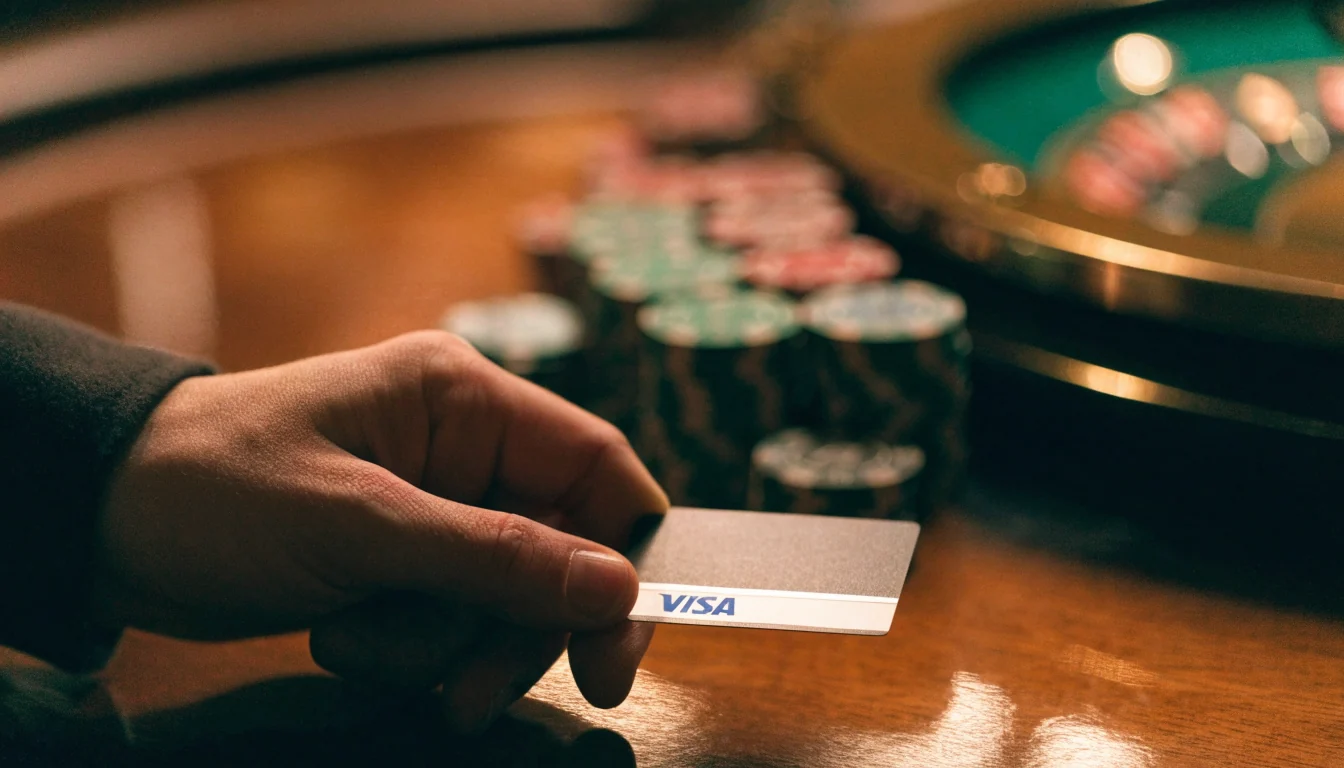
Visa is a way to fund a casino account, while game availability and payment rules depend on the casino and the account.
Visa Deposits and the Slots They Can Fund
A Visa deposit does not select a game or create a separate pool of money for slots. It is a way to add funds to a casino account. Once the deposit has been credited, the casino balance is what the account uses for eligible play, subject to the operator’s rules and the controls attached to the account. The payment method and the game catalogue are related, but they do different jobs.
That distinction is easy to miss in advertising. “Visa slots” can sound like a special class of games, or as though a card deposit unlocks certain titles. In practice, Visa is a payment route, not a slot feature. The games available depend on the casino, while the cashier determines which payment methods are offered for an account. A deposit made with Visa does not, by itself, say anything about the range of slots on offer.
In the UK, casinos commonly accept debit cards, including Visa and Mastercard. That makes Visa a familiar route for funding a casino account, but it is not a promise that every casino, card product or account will be treated identically. The practical point is narrower: where Visa debit is available in the cashier, it can be used to fund the account for the operator’s permitted gambling products, which may include online slots.
When choosing a UK casino that accepts Visa, check the cashier to confirm Visa is currently available and review how withdrawals are handled. The listed payout times offer one practical detail to consider.
1. BeOnBet
Payout speed: 1-3 business days
BeOnBet lists a payout speed of 1–3 business days.
2. Jetsetspins
Payout speed: 1-3 business days
Jetsetspins lists a payout speed of 1–3 business days.
3. Amunbet
Payout speed: 1-3 business days
Amunbet lists a payout speed of 1–3 business days.
4. WinBeast
Payout speed: 1-3 business days
WinBeast lists a payout speed of 1–3 business days.
5. Dieselwin
Payout speed: 1-3 business days
Dieselwin lists a payout speed of 1–3 business days.
6. Chanze
Payout speed: 1-3 business days
Chanze lists a payout speed of 1–3 business days.
7. Revery Play
Payout speed: 1-3 business days
Revery Play lists a payout speed of 1–3 business days.
8. Britsino
Payout speed: 1-3 business days
Britsino lists a payout speed of 1–3 business days.
9. SlotoSport
Payout speed: 1-3 business days
SlotoSport lists a payout speed of 1–3 business days.
10. x3bet
Payout speed: 1-3 business days
x3bet lists a payout speed of 1–3 business days.
The word “fund” also needs a little care. A balance is not necessarily tagged as “slot money” when it arrives. Casino terms may distinguish between cash funds and promotional funds, and a site may impose rules on how either can be used. Those details belong to the account and the offer, not to Visa itself. A card payment should not be read as evidence that every game can be played with every balance, or that a particular payment automatically qualifies for a promotion.
From the operations side, the payment and gaming systems are separate stages. The cashier handles the deposit request; the casino account records the resulting balance; the game then draws from the balance according to the operator’s rules. If a payment is pending or declined, that is a cashier issue rather than a statement about the slot. If a game is unavailable, the cause may lie in the casino’s catalogue or account restrictions rather than in the card network. Different systems, different decisions.
There is also a regulatory boundary around the games themselves. Online gambling in the UK is legal only at sites holding the relevant UK Gambling Commission licence, and licensed casinos must verify a customer’s age before allowing a deposit. For online slots in Britain, autoplay is banned and each spin must last at least 2.5 seconds. The maximum stake per game cycle is £5 for customers aged 25 and over, and £2 for those aged 18 to 24. These are rules about slot play, not Visa settings. The card does not raise or remove them.
That matters because payment language can make the method sound more powerful than it is. A Visa logo beside a casino’s name may tell something about the cashier, but it does not certify a game, change the slot rules or guarantee that a particular account can deposit. Nor does it mean that a slot is “better” because the balance came from a card. Payment convenience is not a measure of game quality.
Casinos That Accept WebMoney in the UK: What to Check · Wirecard Casinos in the UK: How to Check Acceptance
I have seen this confusion arise when people treat a payment label as a product label. A page may group casino accounts, slots and Visa deposits in one phrase, but those are separate questions: whether the operator offers slots, whether Visa is available in its cashier, and what conditions govern the account balance. Combining them in a headline does not combine them in the system. Keep the categories apart.
For someone comparing Visa-funded slot play, the useful starting point is therefore modest: Visa debit can be a route into the casino balance at UK sites that accept it. The balance may then be used for slots that the casino makes available and that the account is permitted to access. No special Visa slot list follows from that fact, and no payment label should be mistaken for a guarantee about games, offers or outcomes.
A deposit is only the entry point. The slot rules remain.
Deposit Limits, Minimums and the Cashier’s Small Print
A Visa deposit can be constrained at both ends: by the smallest payment the cashier will accept and by the largest amount allowed for a transaction or account. Those figures are not universal. They can differ between payment methods, and an account’s status can affect the maximum available. A card being listed as a payment option therefore says little about the amount that can be put through it.
A specialist review reports minimum deposits in the £10–£20 range, with the threshold depending on the selected method. That is a reported range, not a promise that every Visa cashier will accept the same minimum. The figure displayed beside the Visa option at the point of payment is the one that matters for that transaction. A minimum shown on a general information page may not capture a method-specific condition.
The distinction matters in practice. If a deposit falls below the cashier’s floor, the payment may not be submitted at all; trying a different amount is not a way around a separate maximum. Nor should a minimum be mistaken for a recommended deposit. It is an entry condition set for processing, not an indication of what a player ought to spend.
Casinos That Accept Solana in the UK: What’s Verified · Casinos That Accept Klarna in the UK: Deposit Checks
Limits can apply at different levels
Maximums may be set per transaction, per day or per month. A specialist review describes these caps as varying with both payment method and account status. The cashier or account controls may therefore show more than one relevant ceiling: one for the individual payment and another governing deposits across a longer period.
These are separate constraints. A payment can be below the transaction maximum yet still be unavailable because a broader account-level cap has been reached. Conversely, a daily or monthly allowance does not necessarily mean a single payment of that size can be made. The amount accepted is the lowest applicable ceiling, not whichever figure looks largest on the screen.
The wording deserves attention. “Maximum deposit” can refer to a single transaction, while a separate account control may cover deposits over time. A cashier may also reject an amount that sits within a displayed range if another applicable control is lower. I treat each figure as having a scope: what it applies to, and over what period. Small print matters.
Account status changes the picture
A limit can depend on account status as well as payment method. That means a figure seen in one account should not be treated as a fixed Visa limit across a whole casino, or even as a permanent cap for that account. The displayed amount is a condition of the current transaction and account settings.
This is one reason broad claims about the “highest” Visa deposit are weak. Without the relevant cashier and account context, a headline maximum cannot establish what a particular customer can deposit. A cap may be imposed at the payment level or through account controls, and those figures need not match. The useful comparison is the one visible for the intended payment, not a number detached from its conditions.
Do
- Check the Visa minimum for the specific transaction
- Identify the transaction maximum and account-level caps
- Consider personal financial limits as the binding amount
Don’t
- Treat a general information page figure as a promise
- Mistake a minimum deposit for a recommended spend
- Assume a high headline maximum applies to every account
There is also a separate distinction between an operator’s payment maximum and a customer’s own financial limit. UKGC-licensed remote operators must invite new customers to set a financial limit before the first deposit and make account-level limit controls accessible. That safeguard is not simply another Visa transaction cap: it concerns the customer’s chosen control over gambling spend. If it is lower than the cashier’s permitted maximum, it is the binding amount for that account.
I have seen these categories blurred in payment copy, where “deposit limit” is used as if it named one clear rule. It does not. One figure may be the smallest accepted payment; another may cap a single transaction; another may apply over a day or month; and a personal financial control may sit below them. Read the label and its scope, not just the number.
Before confirming an amount
The practical check is brief: identify the Visa minimum, the maximum for the individual transaction, and any wider account cap or personal limit that applies. If the cashier shows separate conditions, they should be read separately rather than combined into an assumed allowance. An amount that meets the minimum can still exceed a maximum; an amount below the maximum can still be affected by an account-level restriction.
Limits are operating conditions, not guarantees that a payment will be accepted in every circumstance. The figures describe what the cashier permits under the displayed terms; they do not turn a larger amount into an appropriate deposit. A clear reading of the minimum and each applicable cap prevents a basic mismatch between the amount entered and the conditions shown.
Casinos That Accept POLi in the UK: Cashier Checks
Small print, not guesswork.
Where Visa Is Available—and What to Check Before Paying
Visa can appear on a casino’s payment-method page without being available for every account or transaction. A specialist review may list Visa and Mastercard as supported methods, but that is a useful starting point, not confirmation that the cashier will offer Visa to a UK customer at the time of deposit. Payment arrangements change, and a general page can lag behind the live options.
I have seen the distinction matter at the point where a broad claim becomes a transaction choice. The cashier is the practical check: it shows which methods the operator currently presents for that account and whether Visa is among them. A logo elsewhere on the site does not perform that check. Nor does a payment-method page establish that every card product carrying the Visa brand is eligible.
That gap is not necessarily a contradiction. A casino can describe a payment method at site level while applying availability at account level. The cashier is where the operator turns that general description into an actionable option. If Visa is not shown there, a reference on another page is not enough to assume a deposit will go through. Treat the displayed options as the live position, rather than trying to infer availability from branding.
Check Before Depositing
- Verify Visa availability in the live cashier
- Confirm the account is set to the correct currency (GBP)
- Ensure the operator holds a UK Gambling Commission licence
- Check that the account currency matches the intended payment
The same caution applies to country wording. A casino may serve customers in more than one market, and a payment page can describe a broader service than the UK-facing cashier presents. For remote gambling licensees serving Great Britain, the relevant operating licence is issued by the UK Gambling Commission. A payment logo does not establish that an operator is licensed to serve the market.
Currency deserves a separate check before the first transaction. Specialist review pages report GBP support, but the account currency still needs confirming before money is sent. The currency displayed in the account or cashier is the useful detail: it determines whether the transaction is handled in pounds or converted from another currency. A GBP symbol on a promotional page is not a substitute for checking the currency attached to the actual account.
That check can be easy to overlook because the payment method and the account currency sit in different parts of the process. Visa may be available while the account is set to a different currency; conversely, a GBP account does not by itself mean Visa is offered. They are separate conditions, and both need to line up before a deposit is made.
In practice, I would read the casino’s payment information as a description of what may be offered, then use the cashier to confirm what is available now. I would also check the account currency before submitting the first payment. These are small checks, but they prevent a familiar mismatch: the method appears on a general page, while the live account presents something different—or the transaction proceeds in a currency that was not expected.
Casinos That Accept USDC in the UK: Payment Guide
The decisive screen is the cashier. Verify the method and the currency there, before committing funds. No guesswork.
Visa Debit Is Not Visa Credit for Gambling
The word “Visa” identifies a card network, not whether a card is eligible for gambling payments. That distinction sits in the card product: a Visa debit card draws on funds held in a bank account, while a Visa credit card provides access to borrowed credit. UK rules treat those products differently. Debit cards may be accepted at casinos; credit-card payments for gambling are prohibited.
The prohibition took effect on 14 April 2020 and has not been relaxed. It applies to remote gambling operators serving the British market, not simply to a particular brand or casino’s preference. A credit card should not be treated as an alternative if a debit-card transaction fails. Changing the route does not make credit-card gambling permissible.
The product matters more than the logo
In my experience, payment descriptions can make this seem more complicated than it is. A cashier may display Visa as a payment option, but that does not mean every card carrying the Visa mark is suitable. The relevant question is whether the card is debit or credit. A Visa debit card is within the category commonly accepted by UK casinos; a Visa credit card cannot be used for gambling payments at a UK-licensed casino.
That remains true if the payment is routed through an intermediary. Remote operators cannot accept credit-card payments for gambling through a money service business, and they cannot accept wallet payments where the wallet permits credit-card funds to be used for gambling. A change in the screen or payment label does not change the underlying source of credit.
Credit Card Ban
Credit-card payments for gambling are prohibited in the UK. This includes using credit cards via money service businesses or wallets.
There can also be products whose names do not make their funding arrangement obvious. The practical distinction is not whether the card looks like a standard bank card or carries a familiar logo, but whether the transaction uses debit funds or credit. If the product is unclear, its issuer’s description is more useful than the network mark alone. No workaround.
Why debit and credit are treated differently
A debit payment uses money available in the linked account. Credit-card gambling, by contrast, lets a customer place gambling payments against a borrowing facility. The UK restriction draws a firm line at that source of funds. It is not a warning label that can be set aside by a casino’s payment menu, nor does the presence of a Visa logo override it.
This is why “casinos accepting Visa” is not a complete description of card eligibility. UK casinos commonly accept debit cards, including Visa and Mastercard, but that broad statement should not be read as acceptance of Visa credit cards. The network name alone is insufficient.
The same principle applies on mobile. A phone interface does not create a different category of card payment: a Visa debit transaction remains a debit payment, and a credit-card payment for gambling remains prohibited. A mobile casino’s layout or wording cannot alter the rule.
Casinos That Accept Citadel in the UK: Payment Checks
For UK players, the useful distinction is therefore simple: Visa debit may be an eligible card type, while Visa credit is not an allowed source for gambling payments. Keeping those categories separate avoids confusing a card network’s broad name with the specific product behind it.
Visa, Casino Bonuses and the Terms Behind the Offer
A Visa logo in a cashier answers one question: whether that card can be used for a payment at that point. It does not answer whether a Visa deposit qualifies for a promotion. I have seen those treated as one decision, and that is where the small print gets missed. Payment acceptance and bonus eligibility are separate conditions.
A casino may display an offer prominently while setting its own rules for which deposits count. Those rules sit in the promotion terms, not in the Visa symbol or the general payment-method page. A phrase such as “new customer offer” describes who the promotion is aimed at; it does not, by itself, confirm that every payment route is eligible. The method needs to be checked against the offer’s wording.
The useful distinction is between being able to deposit and being able to claim. A Visa card may be accepted for a cash deposit while a particular promotion has conditions that affect eligibility. Conversely, an offer’s general presentation may not name Visa at all. Neither silence nor a payment logo should be treated as confirmation. The terms attached to the specific offer are the operative document.
Attention Payment acceptance does not guarantee bonus eligibility; always check the specific promotion terms for excluded payment methods.
I look for the payment-method clause first, then read the rest of the conditions as a separate exercise. The offer may define who can take part and what happens after a qualifying deposit; those details determine whether the promotion is usable, not whether the card itself works. If the wording is unclear, the prudent reading is not to assume that Visa is included. A casino’s support team can clarify the operator’s interpretation, but a written answer is more useful than a broad banner.
There is a reason payment methods are sometimes treated differently in bonus discussions. A specialist review describes PayPal as popular for speed and convenience, while noting that it may be excluded from bonus eligibility. Another specialist review reports that Skrill and Neteller are offered at some sites and are often excluded from promotions. These are reports about particular coverage, not a rule that applies to every casino or offer. They also do not establish how Visa is treated. Only the relevant promotion terms can settle that.
Casinos That Accept PayPal in the UK: Payment Guide
“Bonus available” is a headline, not a full description. The meaningful detail is the condition attached to the method and the offer in question. A promotion can be visible, and the cashier can accept Visa, yet the two statements still do not prove that the deposit qualifies. That gap is where expectations tend to form—and where terms matter.
The same care applies when comparing offers across casino websites. A list of casinos that accept Visa says nothing on its own about bonus eligibility, and a bonus comparison does not establish that every listed payment method qualifies. Read each offer on its own terms. No blanket promise.
Our top casino picks for the UK
- JetsetspinsBonus: 200% Bonus + 100 Free Spins + Free Royal Wheel · Payout speed: 1-3 business days
- BeOnBetBonus: 100% up to €500 + 100 FS · Payout speed: 1-3 business days
- ZombillionBonus: Welcome Pack 250% up to £4000 + 200 FS · Payout speed: 1-3 business days
- SlotoSportBonus: 500% up to £ 10 200+ 777 FS · Payout speed: 1-3 business days
- Revery PlayBonus: 100% up to€1,000+ 100 FS · Payout speed: 1-3 business days
- DieselwinBonus: Welcome Pack 250% up to £4000 + 200 FS · Payout speed: 1-3 business days
- BritsinoBonus: Welcome Package – Get your £2,200 + 2,000 FS · Payout speed: 1-3 business days
- NightLuckBonus: Welcome Pack + 805% Up To 6400€ + 280 FS · Payout speed: 1-3 business days
- ChanzeBonus: Slots Welcome Bonus #1 200% up to €500 · Payout speed: 1-3 business days
- x3betBonus: Welcome Pack 100% Up to £1.000 + 200 Free Spins · Payout speed: 1-3 business days
When Visa Is Not the Only Payment Route
A Visa card is one way to fund a casino account, but it is not the only route a cashier may offer. The alternatives differ in how money is authorised and whether the method can be used for deposits, withdrawals or both. I treat the payment label as only the start of the comparison; the practical detail is what happens when that option is selected.
Open banking and bank transfers are alternatives that connect the payment to a bank account rather than a card. A specialist review reports that these methods can provide instant deposits and fast withdrawals at many sites. That is a description of the sites covered by that review, not a guarantee for every casino or bank. The route can still involve a bank authorisation step, and the precise options depend on the cashier.
Digital wallets are another category. Skrill is described in a specialist review as a frequently offered deposit method at UK-friendly casino sites in 2026. PayPal and Neteller may also appear among the options, though their availability is not universal. A wallet changes how payment details are presented to the casino; it does not remove the need to check the payment conditions attached to the account.
Apple Pay is a further possibility: some UK Gambling Commission-licensed casinos accept it for deposits. It uses a device-based payment flow rather than asking for card details in the same way as a standard card transaction. The fact that a casino accepts Apple Pay for a deposit does not, by itself, establish that it supports the method for every other transaction.
Prepaid vouchers work differently again. Paysafecard is a prepaid product for deposits only, so it should not be treated as a complete payment route if a later payout is part of the plan. The distinction is simple but important: a method can put funds into an account without being usable to receive them back.
Other names may show in payment menus, including Mastercard or services such as Trustly, but a payment logo is not enough to establish what a specific account can use. I have seen cashiers present a broad menu before account details or location narrow the actual choices. The displayed options matter more than a general list on a site’s information page.
Giropay at UK Casinos: Payments, Bonuses and Terms
There is no single substitute that fits every purpose. A bank-linked option may suit someone who prefers not to use a card; a wallet may offer a separate payment interface; and a voucher keeps the deposit prepaid but is deposit-only. The useful comparison is not simply “Visa or something else”. It is whether the alternative fits the intended transaction and the account’s available payment route.
Separate choices. Different mechanics.
Using the Same Account for a Smoother Payment Trail
A payment can be technically valid and still raise a basic question: does the card belong to the person named on the casino account? In my experience, mismatches are where a routine transaction can become an administrative one. The cleanest arrangement is a casino account and a Visa debit card held by the same customer, with the account details entered consistently.
This is not a shortcut around KYC. Remote gambling licensees still have to establish that an account is being used by its registered customer. A card bearing another person’s name, or account details that do not line up, can make that ownership harder to confirm. The casino may need to review the discrepancy before it is comfortable processing activity on the account. That means extra questions or document checks, not necessarily a finding of wrongdoing.
A shared household does not make two people the same account holder. A partner’s card may be available to use in ordinary life, but that does not make it a suitable payment route for someone else’s casino account. Likewise, using a friend’s card because it is at hand creates a weaker transaction trail. The casino has records of the deposit, but the name on the payment instrument points elsewhere. Avoidable friction.
The same principle applies to the details attached to the casino profile. A shortened name, an old address or a different spelling can complicate a straightforward comparison, especially if the payment provider records the customer differently. I would treat the profile as an identity record, not a nickname field. Where a genuine change has occurred, updating the account through the operator’s process is cleaner than trying to explain conflicting details after a payment has been made.
Casinos That Accept Interac in the UK: What to Check
Visa is a card network, not a substitute for a named account. Finding casinos that accept Visa in the UK therefore answers only whether the method is offered; it does not settle whether a particular card can be used with a particular account. The account holder and payment holder still matter. A consistent route is easier to understand than a chain involving several names or instruments.
There can be legitimate reasons why details differ, and a mismatch does not automatically mean a payment will be rejected. The point is narrower: matching ownership information reduces the chance that ordinary checks become a separate obstacle. Operators need to know whose funds are moving through the account, and a coherent record helps make that clear.
The practical pattern is simple: one named casino account, one payment route belonging to that same customer, and details that agree across both. In my view, that is the least complicated starting point for a Visa deposit and any later account review. Keep it consistent.
Visa Withdrawals: Why a Fast Deposit Does Not Mean a Fast Payout
A Visa deposit and a Visa withdrawal are separate steps, even when the same card appears in the cashier. A card payment can reach a casino account instantly, but a payout may take several business days, according to a specialist review. The difference is the work between the two transactions: a withdrawal must be checked and approved before it is sent.
UK anti-money laundering rules generally require winnings to be returned to the original payment source. In practice, that means a casino may attempt to send funds back to the card used for the deposit, where card withdrawals are supported. Visa appearing as a deposit option does not, on its own, establish that the casino can pay out to Visa. The cashier’s withdrawal options and the operator’s terms determine the available route.
InstaDebit at UK Casinos: How to Check Payment Support
The first withdrawal can take longer if KYC is incomplete. A specialist review notes that processing may extend while verification is completed; internal approval is also part of the stated processing time. From the casino’s side, the payment request is not ready for release merely because the balance is available. The account and withdrawal must clear the operator’s checks first.
That is the distinction behind claims of a “fast withdrawal”: the phrase may describe the payment method after approval, rather than the full time from submitting a request to receiving the funds. The clock can include the casino’s review as well as the payment leg. Fast deposit. Different process.
For casinos with Visa deposits, the practical point is to check whether Visa is also shown for withdrawals and whether the account has completed KYC before requesting a payout. If the casino cannot return funds to the card, it may specify another route under its withdrawal rules. That does not make the original-source principle disappear; alternative arrangements can involve further checks.
I have seen payment descriptions blur these stages. “Instant” can refer to the deposit reaching the casino, not a withdrawal arriving in a bank account. A Visa withdrawal is therefore not automatically instant, even when the deposit was. The operator’s approval process and the status of verification remain part of the payout timeline.
The Real Cost of Paying by Visa
A Visa deposit can look free at the point of payment and still carry a cost elsewhere in the transaction. In a specialist payment review, the possible charges are separated into several layers: a casino fee, a payment-provider charge, a fee from the card issuer or bank, a currency-conversion spread and, where relevant, a network fee. Which of these applies depends on the transaction; seeing no casino fee does not establish that the deposit costs nothing.
Total Cost
The actual cost of a deposit may include a casino fee, provider charges, bank fees, network fees, and currency-conversion spreads.
The least visible item can be the exchange rate. If the casino account and the card are not working in the same currency, conversion may take place, and the rate used can include a spread. A specialist review of payment costs notes that this spread can exceed a plainly stated flat fee. That is why a small or zero line-item charge is not enough to compare the total cost.
I have seen payment decisions reduced to one question: “Is there a fee?” That wording can hide the distinction between a charge shown by the casino and costs applied elsewhere. The cashier may display the amount the casino expects to receive, while the card issuer or another part of the payment chain applies its own terms. The confirmation screen and the card statement may therefore tell different parts of the story.
There is no universal lowest-cost way to fund a casino account. The useful comparison is the total for the same intended transaction: casino charges, provider fees, the exchange-rate spread and any network cost. A method with a visible flat fee may still come out cheaper than one with no displayed charge if conversion is involved; the reverse can also be true. The actual currency and the terms shown by each party matter.
For Visa, the practical point is not to assume that “free deposit” means cost-free payment. It describes, at most, one part of the chain. The full cost may only become clear once the casino, payment provider and card issuer are considered together. No single label tells the whole story.
Visa Payments, GamStop and the Limits of a Payment Method
A Visa card does not determine whether a casino is covered by GamStop, nor does changing payment method remove a self-exclusion. The card is a way to fund an account; self-exclusion is an account safeguard. Treating them as interchangeable confuses the payment rail with the operator’s responsibilities.
Casinos That Accept UKash in the UK: Payment Checks
Searches for Visa casinos “not on GamStop” often suggest that a different site or card route can make gambling available again. That is not a safeguard. Remote gambling licensees serving the British market must hold a UK Gambling Commission licence, and UKGC-licensed casinos must provide self-exclusion tools. A payment method does not switch those requirements off.
The distinction matters because a site’s claims about Visa say nothing, by themselves, about its regulatory status or the controls it provides. Casinos outside the UKGC system do not hold a UKGC licence. Their availability should not be mistaken for approval under British rules. A Visa logo is not evidence of protection, oversight or an exception to self-exclusion.
I have seen payment language do a lot of work in a sales pitch. “No limits” may sound like a feature of the card, when the meaningful limits are the operator’s account controls and the individual’s own decision to stop. Different wording. Different thing.
Casinos That Accept AstroPay in the UK
UKGC rules require remote operators to ask new customers to set a financial limit before their first deposit and to make account-level limit controls accessible. These controls are separate from the card choice. A Visa deposit cannot cancel them, and another payment route does not alter the operator’s duty to provide them.
For anyone who has self-excluded, seeking a site described as outside GamStop is not a harmless payment comparison; it can undermine the purpose of the exclusion. The responsible response is not to test another card or search for a route around the block. Keep the exclusion in place and use support services if gambling urges are becoming difficult to manage.
The short version is simple: Visa is a payment method, not a workaround.
Why can a fast payout casino still delay my withdrawal?
A fast payment method does not skip the casino’s internal approval. A first withdrawal may take longer while verification is completed, and an account that is not fully verified can also slow payment.
Why must withdrawals return to the deposit method?
Returning funds to the original payment source is a common anti-fraud and anti-money-laundering control. Using another route may mean additional verification.
Can I deposit in GBP?
Yes, GBP is supported. Check your account currency before paying to avoid conversion.
Which method has the lowest fees?
There is no universally cheapest method: compare the casino’s charge, provider and bank fees, currency-conversion spread, and any network cost for your payment.
What is the fastest withdrawal method for UK casinos?
PayPal, open banking services, and debit cards linked to fast payout systems are generally among the quickest. The casino’s approval process and whether your account is fully verified also affect how soon you receive the money.
Are fast casino withdrawals guaranteed?
No. The casino must approve the withdrawal, and verification or payment delivery factors such as bank cut-off times and weekends can affect how long it takes.
Are Visa and Mastercard deposits definitely debit cards?
No. UK casinos commonly accept Visa and Mastercard debit cards, but check that your particular card product is eligible in the cashier. Credit card gambling is banned in the UK.
SpinDog Payments
Casinos That Accept USDC in the UK: Payment Guide
Learn why a crypto listing does not confirm USDC access, and how cashier availability differs from bonus eligibility and promotion terms.
Payforit Mobile Casinos UK: How Deposits Work
Learn what Payforit funds, how it differs from a mobile casino, and why winnings need another route; availability depends on the casino cashier.
Casinos That Accept UKash in the UK: Payment Checks
Learn why a UKash logo may not reflect the cashier’s current options, what prepaid vouchers can do, and why deposits and withdrawals differ.
Casinos That Accept CashToCode in the UK: What to Check
Learn how to check CashToCode support in a casino cashier and whether a deposit qualifies for a slot bonus; payment methods may be excluded by the terms.
Written by the editors at SpinDog UK Guide.